Tuesday, July 7, 2026

‘Hotter and hotter and hotter’ - Europe’s new climate in seven charts by Qwen (qwen/qwen3-vl-4b)


Stage 1: Summary

A series of record-breaking heatwaves in June and early July have highlighted Europe’s new climate, as reported by BBC Verify. The UK and Europe experienced temperatures far above normal, with June 2023 setting new June highs and breaking previous records across multiple countries. These heatwaves, driven by human-induced climate change, are more intense and frequent due to factors like reduced snow and ice cover and fewer air pollutants.

While some regions saw tropical nights, which exacerbated the heat, scientists warn that these extreme events will become even more common as global temperatures rise. The UK, in particular, is warming faster, making heatwaves more frequent and severe. Experts predict that without significant reductions in greenhouse gas emissions, future heatwaves will continue to intensify.


Stage 2: Future Extrapolation

Future Outlook: The ongoing trend of increasingly severe and frequent heatwaves across Europe, as highlighted by the recent record-breaking temperatures, points towards an intensifying climate crisis in the coming decades. Here’s an extrapolation based on current trends and anticipated developments:

1. **Increased Frequency and Severity of Heatwaves**: The pattern observed in 2023 is likely to persist and possibly worsen. As global temperatures continue to rise due to human-induced factors such as greenhouse gas emissions, heatwaves will become even more common, prolonged, and extreme. This will have cascading effects on public health, agriculture, water resources, and energy demand.

2. **Regional Disparities**: The UK is expected to experience increasingly severe heatwaves, potentially leading to more significant public health crises, strain on infrastructure, and economic disruptions. Other European countries may also see similar trends, but the UK’s rapid warming rate suggests it might become a bellwether for other regions.

3. **Impact on Agriculture and Food Security**: Heat stress on crops and livestock is projected to intensify, threatening food production and potentially leading to increased prices and food insecurity across Europe and beyond. This could exacerbate socio-economic inequalities and lead to further migration pressures.

4. **Urban Heat Islands and Adaptation Strategies**: Cities across Europe may face unprecedented challenges in managing urban heat islands, necessitating innovative adaptation strategies such as increased green spaces, cool roofs, and improved urban planning. This shift will also drive demand for sustainable building materials and technologies.

5. **Policy and International Cooperation**: The urgency of the situation is likely to spur stronger international cooperation on climate change mitigation and adaptation. The European Union, as a significant contributor to global emissions and a leader in climate policy, may push for more ambitious targets under frameworks like the Paris Agreement. National governments might also face increased pressure from citizens and activists demanding action.

6. **Economic Implications**: The economic cost of managing these heatwaves and adapting to their impacts is likely to mount significantly. This could lead to increased investment in renewable energy, energy efficiency, and climate-resilient infrastructure, potentially creating new economic opportunities but also posing challenges for industries reliant on fossil fuels.

7. **Public Health Crisis**: The health impacts of prolonged heatwaves, including heatstroke, respiratory issues, and exacerbation of pre-existing conditions, are expected to rise. This will necessitate strengthened public health systems and emergency response plans, particularly in vulnerable populations.

In summary, the current narrative of Europe’s new climate, characterized by extreme heatwaves, is likely to evolve into a more severe and widespread phenomenon. The trajectory suggests that without drastic reductions in greenhouse gas emissions, the situation will only worsen, with profound implications for the environment, economy, society, and politics across the continent and the world.

Monday, July 6, 2026

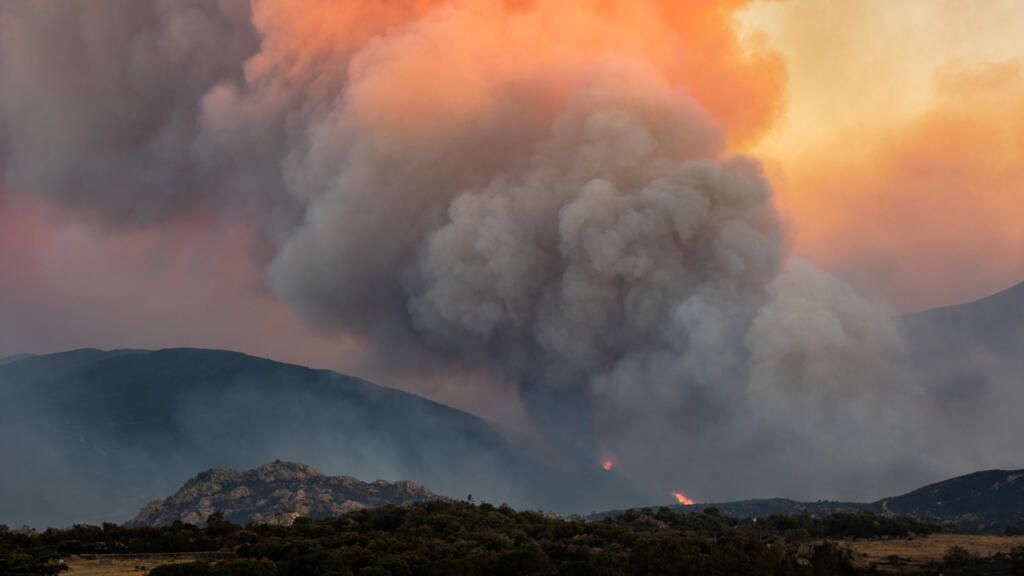
Wildfire in southern France forces evacuation of 10,000 people by Liquid (liquid/lfm2.5-1.2b)

france-wildfire.jpg


Stage 1: Summary

A wildfire in southern France has forced the evacuation of over 10,000 people as temperatures soar during an early summer heatwave. The fire, burning near the French-Spanish border in the Pyrenees, has consumed at least 4,600 hectares and is spreading rapidly due to strong winds. Authorities urge residents to stay away from the Tour de France race finale to allow emergency access. Temperatures are expected to remain high, increasing wildfire risks. This event highlights the growing impact of climate change on Europe’s weather patterns.


Stage 2: Future Extrapolation

Based on the provided summary and broader context of current and historical trends in wildfire activity across Europe, several logical extrapolations can be made regarding the likely future of this story:

### 1. **Increased Frequency and Intensity of Wildfires**

The current event underscores a growing trend of wildfires in southern France and other Mediterranean regions, which are becoming more frequent and intense due to climate change. As global temperatures rise and drought conditions persist, the likelihood of such events increasing will likely grow. This suggests that the story may evolve into a recurring seasonal or annual occurrence rather than an isolated incident.

### 2. **Expanded Geographic Scope**

The Pyrenees region is part of a broader Mediterranean zone increasingly vulnerable to wildfires. Future reports may highlight similar incidents in neighboring countries like Spain, Italy, and even parts of North Africa, indicating a regional shift in wildfire patterns.

### 3. **Enhanced Public Awareness and Policy Response**

As wildfires become more common, governments and international bodies are likely to intensify their focus on fire prevention, early warning systems, and emergency preparedness. This could lead to increased funding for forest management, improved monitoring technologies, and stricter land-use policies in fire-prone areas.

### 4. **Climate Change as a Central Theme**

The summary explicitly ties the event to climate change. In the coming years, this story may become emblematic of the broader narrative around climate-induced environmental crises. It could be referenced in discussions about adaptation strategies, carbon neutrality goals, and international climate agreements.

### 5. **Impact on Tourism and Economy**

The evacuation of 10,000 people during a major event like the Tour de France finale highlights the economic and social costs of wildfires. Future coverage may explore how such incidents affect local economies, tourism, and community resilience, especially in regions reliant on outdoor activities.

### 6. **Technological and Scientific Advancements**

As wildfires become more frequent, there will likely be greater investment in satellite monitoring, AI-based fire prediction models, and rapid response technologies. This could lead to more accurate forecasting and faster containment efforts, reducing the human and environmental toll.

### Conclusion:

The likely future of this story is one of escalating frequency and complexity, with increasing emphasis on climate adaptation, regional cooperation, and technological innovation. The event will serve as a critical case study in understanding how climate change is reshaping Europe’s environmental landscape and prompting urgent policy and societal responses.

Trump confirms he asked Fifa to review Balogun ban by liquid/lfm2.5-1.2b

fifa2026.jpg


Stage 1: Summary

President Donald Trump confirmed he asked FIFA to review a one-match suspension on US striker Folarin Balogun at the World Cup. FIFA suspended the ban for 12 months, allowing Balogun to play in the upcoming match against Belgium. The decision sparked criticism from UEFA, Belgium, and England’s Thomas Tuchel.

Trump defended the ruling, stating it was the right decision, while FIFA emphasized the integrity of football is at stake. The Royal Belgian Football Association (RBFA) expressed shock and contests the eligibility of Balogun after his appeal was dismissed.


Stage 2: Future Extrapolation

Based on the provided summary and the broader context of football governance, several logical extrapolations can be made regarding the likely future of this story:

### 1. **Escalation of FIFA’s Enforcement Power**

The current situation highlights FIFA’s increasing willingness to enforce its rules strictly, particularly when national interests or reputational concerns are involved. This could signal a trend toward more centralized and decisive authority within FIFA, potentially marginalizing appeals from smaller nations or associations like Belgium’s Royal Belgian Football Association (RBFA).

**Implication:** Future cases involving player suspensions may face faster and more decisive action from FIFA, possibly reducing the influence of national federations in challenging decisions.

### 2. **Strengthening of UEFA and National Governing Bodies**

UEFA and national football associations are likely to become more proactive in defending their members’ rights and challenging FIFA rulings. This could lead to a more adversarial relationship between FIFA and these bodies, especially if they perceive a pattern of favoritism or inconsistency.

**Implication:** We may see increased legal and political battles over player eligibility, with national federations forming coalitions to support their members in disputes.

### 3. **Public and Media Scrutiny**

The controversy has already drawn significant media attention and public commentary. As the story progresses, continued scrutiny from journalists, analysts, and fans could shape public perception and pressure FIFA to maintain transparency or fairness in its decisions.

**Implication:** The narrative may evolve into a broader discussion about the balance between international football governance and national sovereignty, especially in high-profile cases.

### 4. **Potential for Legal Challenges**

The dismissal of Balogun’s appeal by the Royal Belgian Football Association (RBFA) sets a precedent. Future players or associations may challenge similar suspensions more aggressively, especially if they believe the process was biased or rushed.

**Implication:** Legal battles could become more common, with players seeking redress through national courts or international arbitration mechanisms.

### 5. **Impact on Player Rights and Transparency**

This incident may accelerate calls for greater transparency in FIFA’s disciplinary processes. There could be increased pressure for clearer guidelines, public reporting of decisions, and more accountability from the organization.

**Implication:** The future of football governance may see a push toward reform, with stakeholders demanding more equitable and open systems.

### Conclusion: Likely Future Outcome

The story is likely to evolve into a broader narrative about the tension between global football governance and national interests. FIFA’s enforcement power may grow, while national associations like Belgium’s RBFA will continue to push back. The outcome could either reinforce FIFA’s authority or catalyze a shift toward more decentralized and transparent decision-making in international football.

**Trend:** A consolidation of power within FIFA, with increased scrutiny from national bodies and growing public awareness of the stakes involved.

Quebec’s biggest landfill gets emergency approval to pile garbage higher by liquid/lfm2.5-1.2b

salaberry-de-valleyfield.jpeg


Summary

The Quebec government has granted emergency approval for the temporary expansion of Terrebonne landfill, the province’s largest waste management site, north of Montreal. The expansion aims to increase capacity by 1.2 million tonnes annually without enlarging the physical footprint, addressing an imminent capacity shortage.

This decision bypasses the usual environmental impact assessment and review process due to the urgent need. The landfill currently handles about 30% of Montreal’s waste and faces criticism from environmental groups for its handling of organic waste and lack of progress toward waste reduction goals.


Sumarry Extrapolation of possible outcomes

Given the current context, several potential future outcomes can be extrapolated for this story:

1. **Increased Environmental Scrutiny**: The emergency approval process may trigger heightened scrutiny from environmental groups and possibly even some governmental bodies. This could result in more rigorous reviews in the near term as stakeholders attempt to counteract criticism and mitigate negative impacts. Over time, if the expansion continues unchecked, it may lead to stricter regulations or additional requirements to address concerns about waste management practices, landfill emissions, and waste diversion strategies.

2. **Potential for Policy Change**: The urgent nature of this decision might prompt the Quebec government to reassess its waste management policies. The crisis could catalyze a broader conversation about sustainable waste management practices at provincial and potentially national levels. This might lead to legislative changes or the introduction of new policies aimed at reducing reliance on landfills, promoting recycling, composting, and waste reduction initiatives.

3. **Public Backlash and Activism**: Given the existing criticism from environmental groups and public dissatisfaction with the current landfill’s management practices, there may be an increase in activism and public protests against the expansion. This could lead to a protracted battle between developers seeking to expand capacity and environmental advocates pushing for more sustainable solutions or outright opposition to the project. The dynamics of public opinion could significantly influence future policy decisions.

4. **Economic Implications**: As the landfill seeks to increase its capacity, the economic implications could become pronounced. Higher capacity means potential cost savings in waste disposal for municipalities and businesses, but it also implies a higher environmental risk. This situation may lead to a reevaluation of economic incentives for waste management practices, potentially favoring investments in sustainable waste reduction technologies over landfill expansions.

5. **International Attention**: Quebec’s approach to landfill expansion could draw attention from international environmental organizations and other jurisdictions grappling with similar waste management challenges. This could result in cross-border learning and collaboration, influencing Quebec’s policies and practices in the future as it seeks to balance environmental concerns with economic needs.

In summary, while the immediate need for increased landfill capacity might prompt continued expansion under current circumstances, the long-term trajectory appears likely to be shaped by heightened environmental scrutiny, potential policy shifts towards sustainability, public activism, and economic considerations. These factors will intertwine to define the future of this story, potentially leading to more stringent regulations, innovative waste management solutions, and a broader cultural shift toward sustainability in waste handling practices.

Sunday, July 5, 2026

AI is ‘not smart’ so what’s next in artificial intelligence?

bigstock-ai-the-concept-of-artificial-473117115-1.jpg


Stage 1: Summary

AI experts warn that current large language models (LLMs) like ChatGPT lack true understanding and cannot handle complex real-world tasks, such as household chores. Yann LeCun, a leading AI researcher, argues that the next generation of AI should focus on systems capable of reasoning about physical reality rather than just accumulating knowledge.

Paris-based Advanced Machine Intelligence Labs (AMI Labs) is developing a new AI model called Joint Embedding Predictive Architecture (JEPA), which uses abstract representations to better understand and predict real-world outcomes. This approach aims to move beyond the limitations of current AI, potentially leading to more flexible and human-like intelligence in the future.

Stage 2: Future Extrapolation

The likely future of this story centers around a paradigm shift in artificial intelligence—from narrow, knowledge-accumulation models (like current LLMs) toward more embodied, reasoning-oriented systems capable of interacting meaningfully with physical environments. The summary highlights a growing consensus among AI experts that true intelligence requires not just vast data but the ability to reason about and adapt to real-world constraints, such as physics, sensor feedback, and dynamic contexts.

Given this trajectory, several implications and trends can be extrapolated:

1. **Shift Toward Embodied AI**: The development of models like Joint Embedding Predictive Architecture (JEPA) reflects a broader industry movement toward AI systems that integrate perception, reasoning, and action. This will likely accelerate as companies invest in hardware and software that support real-time interaction with the physical world.

2. **Human-Like Reasoning Over Data Accumulation**: As experts like Yann LeCun emphasize, future AI should prioritize understanding causality, context, and physical laws rather than simply memorizing facts. This could lead to more robust systems capable of handling ambiguous or novel situations—critical for applications in healthcare, robotics, and autonomous systems.

3. **Regulatory and Ethical Considerations**: With the push toward more intelligent and autonomous systems, regulatory frameworks will need to evolve to address safety, transparency, and accountability. This could result in stricter oversight but also open new opportunities for innovation in trustworthy AI.

4. **Collaboration Between Academia and Industry**: The involvement of institutions like AMI Labs in pioneering next-gen architectures suggests a growing trend of cross-sector collaboration. We can expect more joint research initiatives aimed at solving complex, real-world problems that current AI struggles to address.

5. **Potential for Democratized Access to Advanced AI**: As the cost and complexity of developing such systems decrease, smaller organizations and even individuals may gain access to more sophisticated AI tools. This could democratize innovation but also raise concerns about misuse or inequality in AI capabilities.

In summary, the story is likely to evolve into a narrative where AI becomes more integrated with physical reality, emphasizing adaptability, reasoning, and real-world applicability—ushering in a new era of intelligent systems that are not just smarter, but more human-like in their interaction with the world.